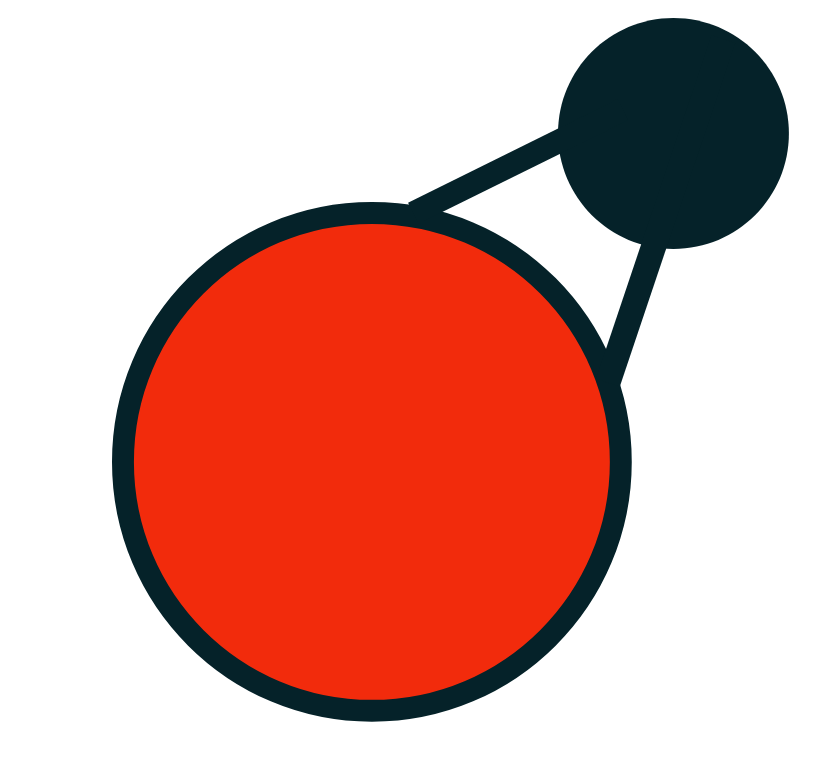
When dealing with difficult ideas and unfamiliar terminology, it can be helpful to use an analogy or take a word out of its familiar context in order to theorize it. Taken out of its typical context and made into an analogy, the concept of the political line can be made more readily available to anarchist theory. First, by removing the modifier “political” we can ask: what is a line, and what does it do? If we were to draw an ordinary line on paper, we would find that it can:
1. Establish continuity between two or more points
2. Create a frame of reference
3. Indicate direction
4. Define a shape
Going further with our analogy, we can think about a line of text on a page; a line of string or wire; a railroad track; a group of people waiting to enter a concert; an escape route, a finish line, and so on. All of these examples enrich our understanding of what a “line” can do. If we return the modifier “political”, we can see that a political line:
1. Connects instances, or points, of political action to each other
2. Creates a framework for political analysis
3. Indicates strategic direction for a political formation
4. Defines and distinguishes
The political line is an essential feature of anarchist organization. The struggle to define and unify around a political line, rather than around formality or terminology, is a distinguishing feature of a specific anarchist organization. In this way, the political organization is a series of well-defined and connected lines which support the work of the militants. Political lines unite anarchists around ideas and goals, and strategic-tactical lines coordinate their practice on the social level.
The political line is collectively constructed. It’s based on commitments that militants have to social spaces as well as to the political organization. So, it’s important to consider the principles, the initial points which were agreed on before organizing together. While having similar responses to certain questions can determine an initial amount of unity, over time, the specific group may not be satisfied with the existing degree of unity and may want to work to strengthen it. A high degree of unity doesn’t happen without struggle, but struggling on the political level isn’t the same as struggling with class enemies or antagonists. It’s a struggle to build unity, something which is developed, formed, and built together. It’s not something that you can just find or be given. By contrast, people interacting with an authoritarian political line do not have a say in the directions or strategy that they’re following. Authoritarian unity only moves in one direction. It’s handed down, not constructed from below.
A political line is more than a statement of affinity or points of unity. Affinity refers to a certain practical commonality people have, and unity gathers people around particular concepts. So, the political line must be supported by both unity and affinity, but these labels will run up against limits when they come into contact with practice. We have to expect that political organizing will not be straightforward. It will take struggle and time to reach a shared understanding. The political line is what guides the militants of an organization toward their goal. It’s the mark against which an organization measures its progress. Without it, there can be no effective political practice. It connects unity to affinity; it connects the political level to the social level; it connects theory to practice; it connects means to ends. Social Anarchism and Organisation is an example of the political lines which have been woven together into an organizational platform. It’s the result of the collective political struggle of FARJ’s militants.
(See the September Document from Militant Kindergarten)
 CES
CES 